
01
Leaky roof repair
Trace likely water-entry routes, evaluate the surrounding assembly, and repair the affected roofing and flashing components.
Focused repair work for active leaks, damaged materials, vulnerable penetrations, deteriorated decking, and storm-related problems.
Water often travels before it becomes visible indoors, so the stain on a ceiling may not be directly beneath the roof defect. A useful repair starts with diagnosis. We assess likely entry points, surrounding materials, flashing, penetrations, and drainage before defining a repair area.
The exact combination of work is confirmed after inspection and written into the proposal.
Trace likely water-entry routes, evaluate the surrounding assembly, and repair the affected roofing and flashing components.
A prompt assessment that prioritizes active water entry, interior risk, and a safe short-term or permanent repair plan.
Repair or replace vulnerable metal and sealant details at walls, chimneys, edges, valleys, and transitions.
Address missing, cracked, displaced, or otherwise damaged surface materials and inspect the assembly beneath them.
Evaluate and reseal compatible details around vents, pipes, skylights, mounts, and other roof openings.
Open a defined area when needed to replace deteriorated sheathing or water-shedding layers before restoring the finish roof.
Apply compatible protective products only where the existing system and surface preparation make them appropriate.
Install a temporary weather barrier over an accessible damaged area when a permanent repair cannot be completed immediately.
Document and repair roof areas affected by wind-driven debris, displaced materials, lifted edges, or other weather-related damage.
Correct vulnerable areas where roof planes meet and water volume concentrates, including compatible underlayment and flashing work.
Address water-entry concerns at curbs, counterflashing, step flashing, headwalls, and other roof-to-structure intersections.
Replace localized deteriorated roof-edge components when their condition affects drainage, gutter attachment, ventilation, or finish quality.
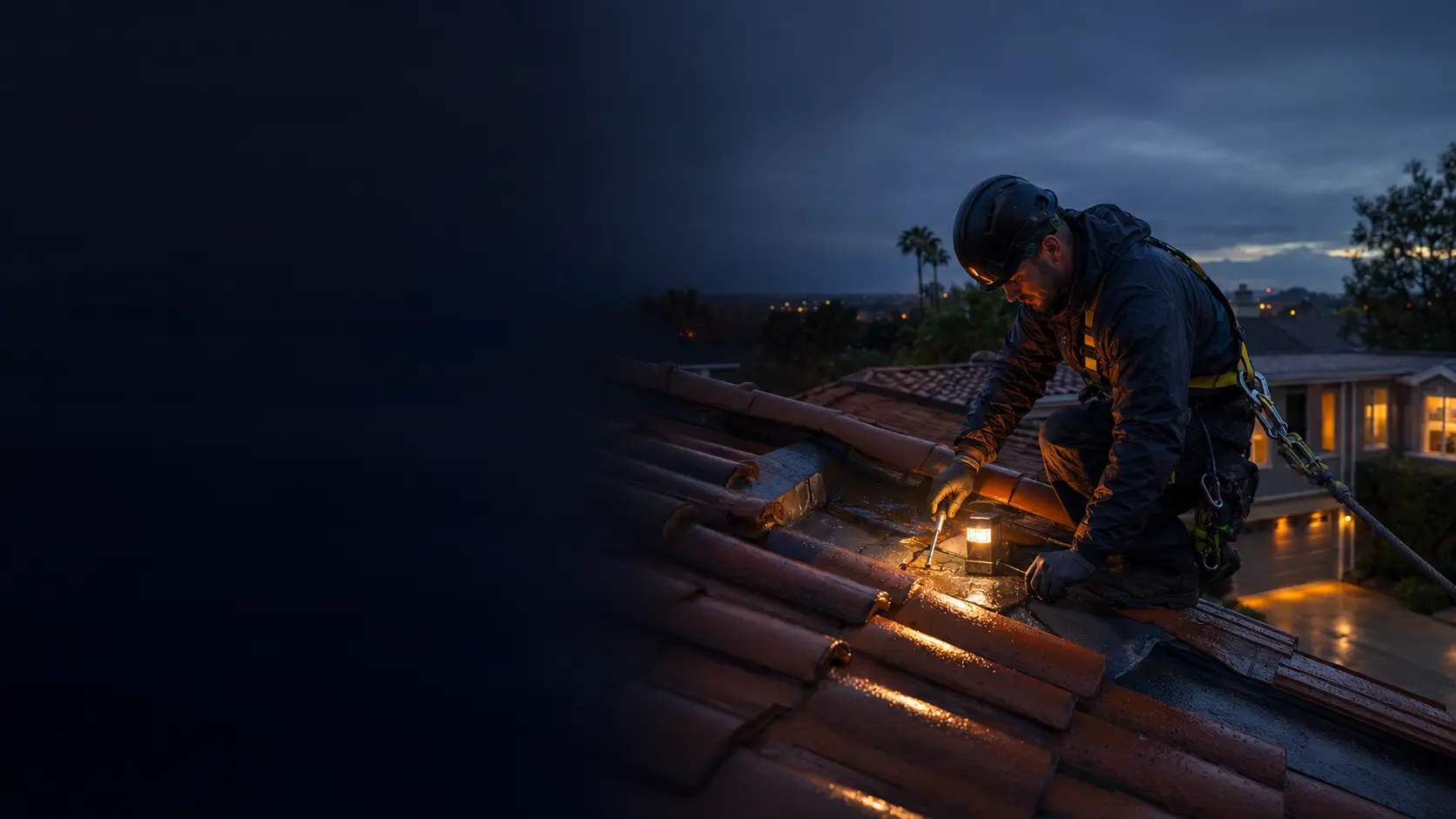
The visible symptom, likely water path, and surrounding roof components are considered before a repair is proposed.
Photos and plain-language explanations help distinguish the repair area from unrelated roof conditions.
When weather or material availability affects timing, the immediate protection plan is separated clearly from permanent work.
One symptom does not establish a diagnosis. It is a reason to document the concern and have the relevant roof areas evaluated.
Schedule an inspectionCeiling stains, bubbling paint, or damp drywall
Drips or musty odors after rain
Loose, cracked, missing, or displaced shingles or tiles
Gaps or deterioration around vents, skylights, walls, or chimneys
Granules collecting in gutters or near downspouts
Sagging, soft-looking, or visibly deteriorated roof areas
Specific timing depends on access, roof conditions, materials, weather, approvals, and project size.
We gather information about when the leak appears, where it is visible, and any recent weather or roof activity.
Accessible roof and interior clues are assessed, with attention to drainage, penetrations, transitions, and nearby materials.
The proposed area, materials, limitations, and whether temporary protection is needed are presented before work begins.
The agreed work is completed, debris is removed, and repaired details are reviewed and documented.
These are general answers. A recommendation for your property requires inspection and a defined scope.
Water can travel along underlayment, decking, framing, pipes, or other surfaces before it reaches the visible ceiling. That is why diagnosis should consider the area above and upslope of the stain, not only the exact interior location.
No. A tarp is temporary protection intended to reduce additional exposure until safe, compatible permanent repairs can be completed.
Send the property address, a short description, and safe-to-take photos if you have them. We’ll start with the appropriate next step.